
A legionella risk assessment examines the water system, the ways people could be exposed to contaminated aerosol and the controls used to manage that risk. Recommendations are based on the actual installation, how the building is used and who may be exposed.
Legionella Risk Assessment
Water-system risks, exposure and controls reviewed together, with recommendations matched to the building and its users.
Legionella Risk Assessment enquiry
Water-system layout
Storage tanks, outlets and infrequently used pipework help identify where stagnation and temperature conditions need assessment.
People using the premises
The occupants and their susceptibility help the assessor consider the consequences of exposure from the water system.
Water-system risks and exposure
Storage, temperatures, circulation, little-used outlets, deposits and associated equipment can all affect the conditions in which Legionella may multiply. The assessment looks at the system as a whole rather than treating one outlet as representative of every part.
Who uses the premises also matters, particularly where occupants may be more susceptible. Drawings, temperature records, maintenance history and other existing information help the assessor understand how the system is operated between visits.
Discuss legionella risk assessment
Complete the form and we will get back to you.
Control measures, responsibilities and review
The findings identify management responsibilities, current controls, improvements and the monitoring appropriate to that system. Cleaning or disinfection may be one action, but it does not replace assessment of the installation and its management.
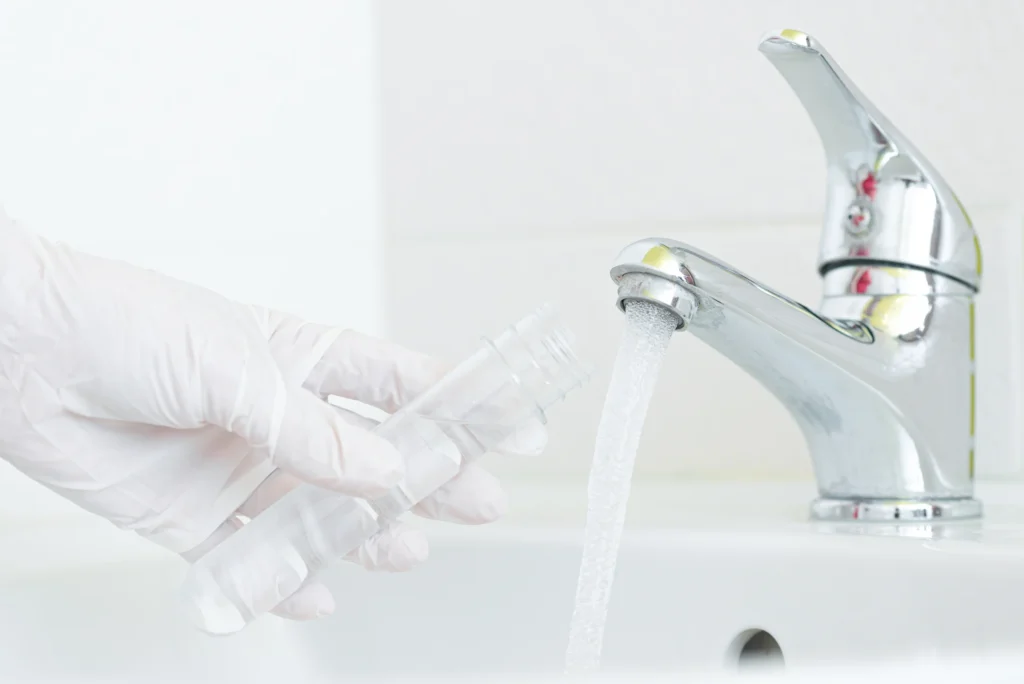
Routine microbiological monitoring is not usually required for ordinary hot and cold water systems when controls are satisfactory. Testing can be useful where control is in doubt, while healthcare and care settings may require additional monitoring where the risk assessment identifies susceptible occupants or other higher-risk circumstances. A sample is evidence from one place and time, not a continuing safety certificate.
Dead legs, temperatures and water-system control
Unused pipework and infrequently used outlets can behave differently from regularly used parts of the system. HSE’s L8 and HSG274 guidance informs the assessment, with temperature checks and other controls chosen for the system involved. Reviews are needed when changes or other evidence show that the existing assessment may no longer be valid.
Legionella Risk Assessment: common questions
Is a water sample the same as a legionella risk assessment?
No. Sampling provides specific test information; the assessment examines the system, exposure risks and management controls.
Does every assessment require tank disinfection?
No. The required controls depend on the system and findings. Cleaning or disinfection may form part of the action plan.
When should the assessment be reviewed?
Review it regularly and when changes or evidence suggest it may no longer be valid, including changes to the system or its use.
Is routine Legionella sampling required for every ordinary hot and cold water system?
No. HSE guidance says routine microbiological monitoring is not usually required for ordinary hot and cold water systems when controls are satisfactory; testing may be justified where control is in doubt.
Why do little-used outlets matter in a Legionella assessment?
Stagnation and temperature conditions can differ from regularly used parts of the system, so little-used outlets and unused pipework can affect the control strategy.