
A noise assessment examines sound affecting a proposal or produced by its operation. Monitoring is planned around the source, operating period and receptors that matter, so the results can be used for design and mitigation.
Noise Assessment
Representative measurements and technical assessment of sound sources, operating periods, receptors and mitigation.
Noise Assessment enquiry
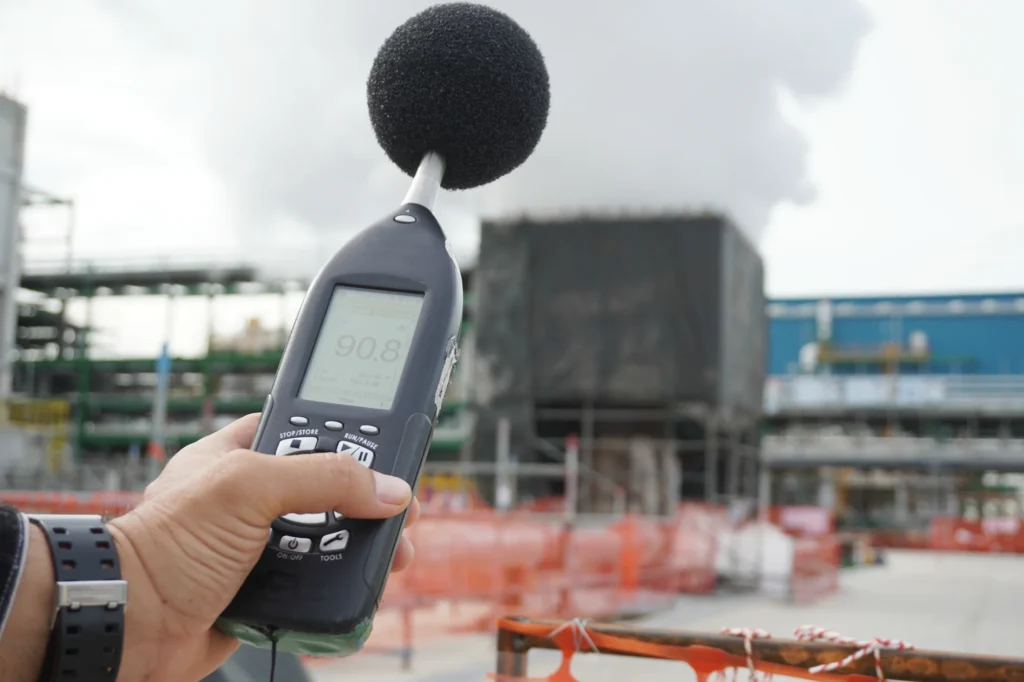
Representative operating conditions
Measurements need to reflect the relevant activity, operating period and background sound at the site.
Nearby receptors
The position and use of neighbouring buildings help establish where sound needs to be assessed.
Representative noise conditions
Industrial plant, deliveries, traffic and building services can have very different patterns. A short daytime survey does not answer a question about equipment that runs at night, and a measurement taken during an unusual event may not represent normal conditions.
Background sound, weather and notable events are recorded because they affect interpretation. The operating details of the source and the position and use of nearby receptors are considered with the measurements.
Discuss noise assessment
Complete the form and we will get back to you.
Noise mitigation and design decisions
Mitigation may involve source selection, equipment location, operating arrangements or acoustic treatment. The report explains which measures support the conclusion and what assumptions need to remain true for them to work.
Planning noise and workplace hearing exposure are different assessment purposes. Evidence prepared for neighbours should not be treated as an occupational noise assessment, and a material change in operating hours or equipment can require review.
Sound character, context and uncertainty
BS 4142 has a defined scope for assessing industrial and commercial sound. Tonality, impulsivity and other characteristics can affect the rating, but context and uncertainty still matter; the numerical difference is not a universal pass-or-fail rule.
Noise Assessment: common questions
Is a single daytime reading enough?
Only if it represents the question being assessed. Night operation or variable sources may require a different survey.
Does a planning noise report assess staff hearing exposure?
Not automatically. Occupational noise assessment has a separate purpose and scope.
Can mitigation be added after the layout is fixed?
It may be possible, but early assessment gives more scope to address source location, layout and operating arrangements.
Can a quieter source still need mitigation?
Yes. Character, timing and background conditions can affect impact as well as the measured level. The assessment considers the source in context.
Does BS 4142 provide a universal pass-or-fail number?
No. The standard considers industrial and commercial sound within its stated scope, including sound character, context and uncertainty as well as numerical differences.