
Our non-hazardous commercial waste collection service matches containers and collection frequency to the material a business produces. Storage space, vehicle access and predictable busy periods are considered so waste can be contained between collections.
Non-Hazardous Commercial Waste Collection
Containers, collection frequency and access arrangements matched to the waste produced and available storage.
Non-Hazardous Commercial Waste Collection enquiry
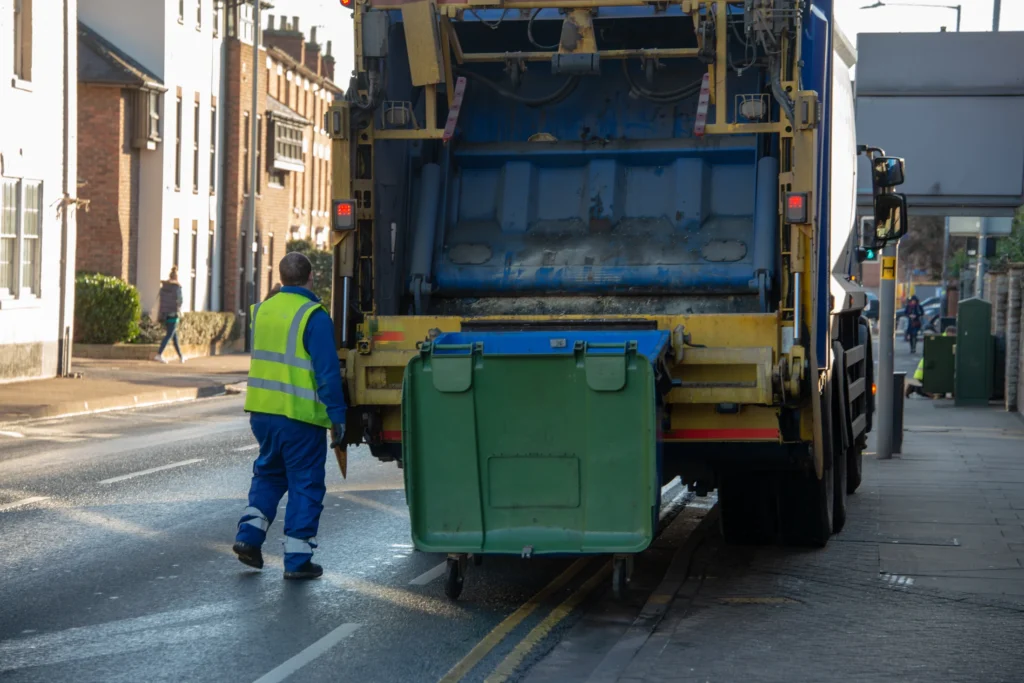
Collection access
Gates, loading areas and pedestrian activity influence where containers are presented and when vehicles can attend.
Accepted materials
Staff instructions should identify the materials accepted in each container, including restrictions relevant to that collection.
Container capacity and collection frequency
A warehouse may generate most packaging around deliveries, while a food business can peak at weekends. Capacity needs to reflect those patterns rather than rely on loose bags or overflowing containers when volumes rise.
Staff need to know what each container accepts. Dry recycling, food waste and residual waste are subject to separation requirements that vary across the UK and by business circumstances, so the applicable rules are checked for the premises.
Discuss non-hazardous commercial waste collection
Complete the form and we will get back to you.
Collection access and accepted materials
Bin stores, gates, loading areas and pedestrian routes affect how the collection point works. Vehicle access and collection timing are arranged so they do not create avoidable conflict with deliveries or people using the site.
The transfer information must describe the waste accurately. Rejected recycling, repeated contamination or chronic overfill indicates that the material, capacity or staff instructions need review. A new production waste is checked before it is added to an established collection.
Non-Hazardous Commercial Waste Collection: common questions
Can the same bin collect every business waste?
No. Accepted materials and segregation requirements depend on the waste and collection route.
What if the business starts producing a new waste stream?
Check the classification and collection acceptance before placing it in an existing container.
Does a collection contract replace transfer information?
The required information must still accurately describe the waste and movement. Check that the documentation meets the applicable requirements.
Can the schedule change for busy periods?
Yes, subject to agreed collection arrangements. Seasonal peaks should be considered alongside storage space so the containers remain suitable for the volume produced.
What happens if recycling is contaminated?
The receiving route may need review or the load may be rejected. We assess the cause and the separation arrangements rather than assume all mixed material remains recyclable.