
We prepare air quality assessments for development and operating sites. The work can consider emissions created by a proposal, exposure of future occupants to existing pollution, or both where the project raises those questions.
Air Quality Assessment
Screening, monitoring or modelling selected for the emission source, proposal and receptors that could be affected.
Air Quality Assessment enquiry
Nearby sensitive locations
Homes, schools and other relevant locations help determine where potential air-quality effects need assessment.
Traffic and site activity
Vehicle movements and on-site sources need consideration according to the development being proposed.
Air-quality baseline and assessment method
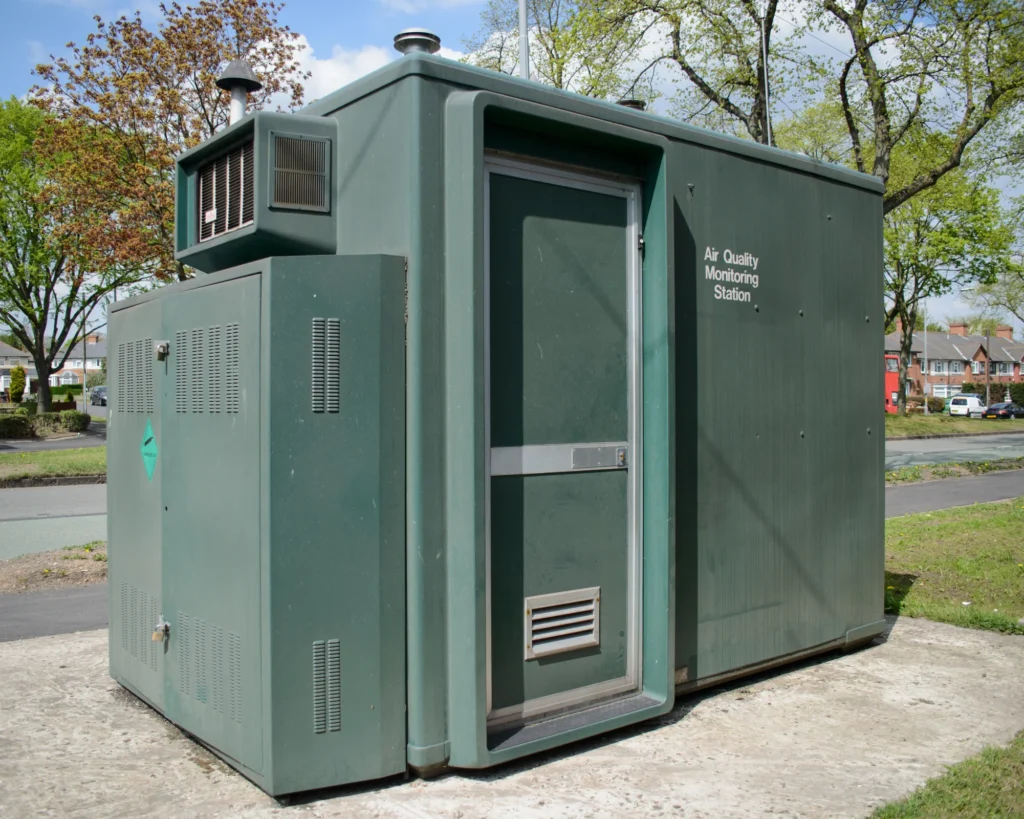
Road traffic, combustion plant, industrial processes and construction activity produce different air-quality issues. Local monitoring and background information establish context, while the proposed use identifies the people or other sensitive locations that may be affected.
The method follows the source and likely scale of the effect. Screening may be enough for one proposal; another may need monitoring or dispersion modelling. The choice is made from the assessment question rather than by applying the same study to every site.
Discuss air quality assessment
Complete the form and we will get back to you.
Design assumptions and operational controls
Plant location, discharge characteristics, traffic assumptions and operating hours need to match the design being assessed. Construction dust is considered separately from long-term operational emissions where both are relevant.
The report identifies data sources, assumptions, predicted effects and mitigation. If the plant, traffic or development changes materially, the conclusions need checking against the revised proposal rather than being carried forward automatically.
Inputs used in dispersion modelling
Detailed modelling depends on inputs such as plant output, stack height and discharge conditions, operating hours and traffic data. Those inputs need to match the submitted design, because a material change can alter the predicted effect and the mitigation required.
Air Quality Assessment: common questions
Does every assessment need air monitoring on site?
No. The question and available evidence determine whether monitoring, screening or modelling is appropriate.
Is construction dust the same assessment as operational emissions?
They are related air-quality topics but involve different sources, timescales and controls.
Can a report be reused after changing the proposed plant?
Only after checking the revised emissions and operating assumptions against the assessment.
Does every development require dispersion modelling?
No. The proposal and available evidence determine whether screening is sufficient or more detailed assessment is needed.
What information is needed for plant-emissions modelling?
The assessment may need plant output, stack and discharge information, operating hours and other inputs that describe the proposed installation.