
A Phase 2 site investigation tests the uncertainties identified in the conceptual site model. Locations, depths and laboratory analysis are selected for the suspected sources, pathways and proposed development rather than taken from a fixed testing package.
Phase 2 Site Investigation
Targeted intrusive work, sampling and monitoring designed around the conceptual site model and proposed development.
Phase 2 Site Investigation enquiry
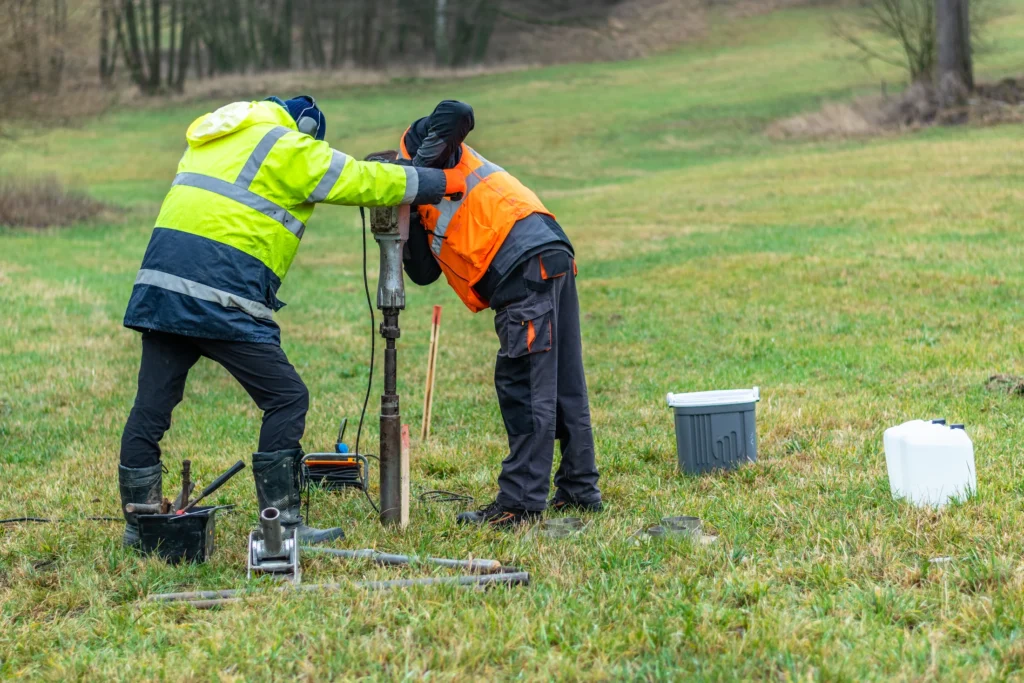
Targeted investigation locations
Sampling positions and depths are chosen to investigate uncertainties identified in the earlier site assessment.
Laboratory testing
The analytical schedule needs to address the suspected substances and the materials actually sampled.
Investigation locations, depths and analysis
Trial pits, boreholes and monitoring points are placed to investigate the questions raised by the earlier assessment while accounting for services, access and construction constraints. The investigation design explains what each location is intended to establish.
Soil, groundwater and ground-gas evidence answer different questions. Laboratory suites are chosen for plausible contaminants, and the sample handling and detection limits need to be suitable for the assessment being made.
Discuss Phase 2 site investigation
Complete the form and we will get back to you.
Interpreting results for the proposed use
Field observations and laboratory results are interpreted together with the investigation limitations. The updated risk assessment then identifies whether more monitoring, a design change or remediation is justified.
Favourable results at selected locations do not prove that every depth and area has been investigated. Unreached ground and changes to the construction proposal remain relevant when deciding how far the conclusions can be relied on.
Laboratory analysis and monitoring design
Petroleum hydrocarbons, PAHs, metals or asbestos may be relevant on some former industrial sites, but no single analytical suite is right for every investigation. Groundwater and gas conditions can also vary with time, so repeated monitoring is used where the risk question cannot be answered by one observation.
Monitoring points are located so they can be reached safely for the later visits required by the investigation design.
Phase 2 Site Investigation: common questions
Is the same testing suite suitable for every site?
No. Site history, suspected contaminants and relevant exposure pathways should determine the analysis.
Do soil results answer the groundwater question as well?
Not automatically. Soil and groundwater samples describe different media, so the investigation needs evidence appropriate to the pathway and receptor being assessed.
Are laboratory certificates the complete investigation report?
No. Results need interpretation alongside sampling locations, field observations, proposed use and limitations.
Why can groundwater monitoring need several rounds?
Groundwater levels and contaminant concentrations can vary with time and conditions. The monitoring period and frequency should be sufficient to answer the risk question being investigated.
What do detection limits mean for interpretation?
Laboratory detection limits affect what a result can establish. They are considered alongside sampling coverage, the site model and the intended use.