
Ground investigation provides evidence about the land beneath a project for engineering and environmental decisions. We choose field methods for the questions the design team needs answered; one set of boreholes or tests does not automatically cover every purpose.
Ground Investigation
Fieldwork and testing planned for geotechnical, contamination and drainage questions, without treating one dataset as evidence for every purpose.
Ground Investigation enquiry
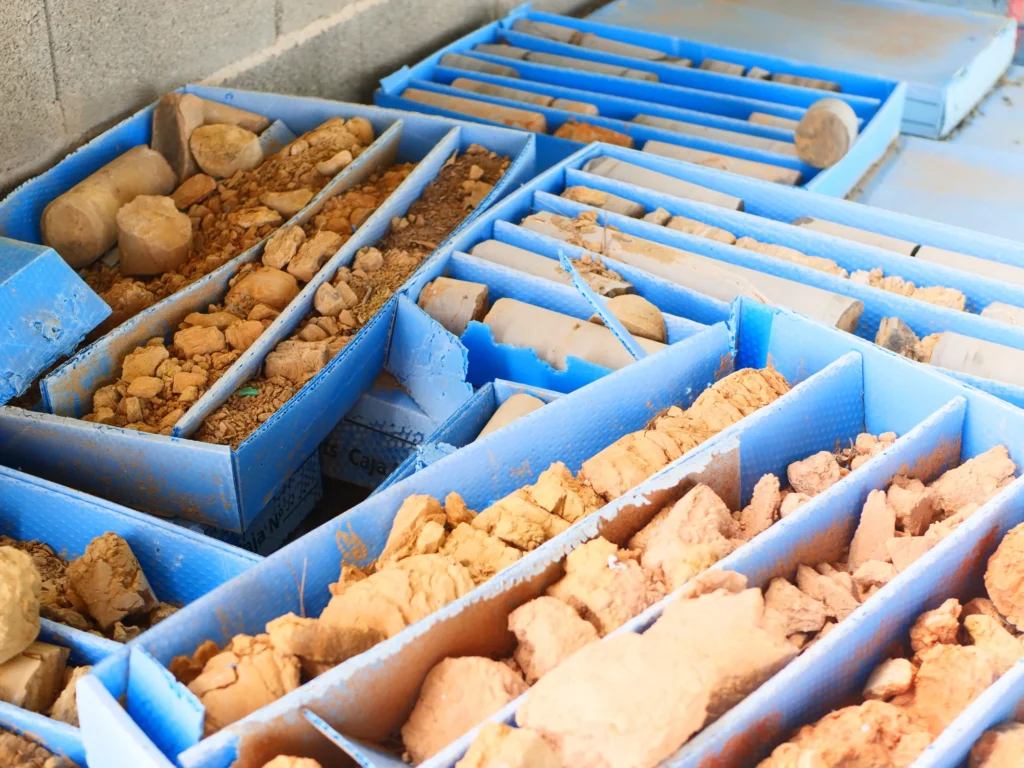
Ground conditions for design
Boreholes, trial pits and testing provide information relevant to the proposed foundations and earthworks.
Access for investigation
Services, surface conditions and working space influence where investigation equipment can operate.
Ground evidence for different design questions
Foundation design, earthworks, infiltration drainage and contamination assessment can need different observations and samples. Identifying those questions before fieldwork allows one visit to serve several purposes where the methods and locations genuinely suit each one.
Geological records, site history and previous boreholes help plan the work, but ground conditions can vary between investigation points. Existing information is used as evidence, not as a substitute for considering that variability.
Discuss ground investigation
Complete the form and we will get back to you.
Field investigation and technical interpretation
Trial pits, boreholes, sampling and in-situ testing are selected for the ground and required evidence. Buried services, unstable ground, contamination and restricted access all affect where and how the work can be carried out safely.
Factual logs record what was observed; engineering and environmental conclusions interpret those observations for a particular purpose. Foundation advice, infiltration conclusions and contamination assessment therefore need the appropriate specialist work rather than being inferred from borehole logs alone.
Investigation coverage and limitations
Ground conditions are measured at selected locations, not continuously across the site. Conditions between investigation points are interpreted from the available evidence.
The report records access restrictions, uninvestigated areas and other limitations that matter to the design alongside the interpreted ground profile.
Ground Investigation: common questions
Does a ground investigation automatically assess contamination?
Only if the environmental sampling and interpretation are included in the scope.
Are borehole logs enough to design foundations?
They are evidence for the design, but an appropriate engineering interpretation and design process are still needed.
Can drainage infiltration testing be carried out during the ground investigation?
Yes, where the requirements and suitable locations are agreed in advance.
Can foundation samples automatically be used for chemical analysis?
Not necessarily. Sampling and handling must meet the analytical requirements. The environmental questions should be considered when the investigation is designed.
Does investigation remove all ground uncertainty?
No. It provides evidence at selected locations. The interpretation and limitations should remain clear in the design information.