
A contaminated land assessment considers whether substances in the ground could create an unacceptable risk for the current or proposed use. We relate the site history, ground evidence and intended development to the people, water and other receptors that may be affected.
Contaminated Land Assessment
We assess contamination sources, pathways and receptors to determine whether further investigation or remediation is justified.
Contaminated Land Assessment enquiry
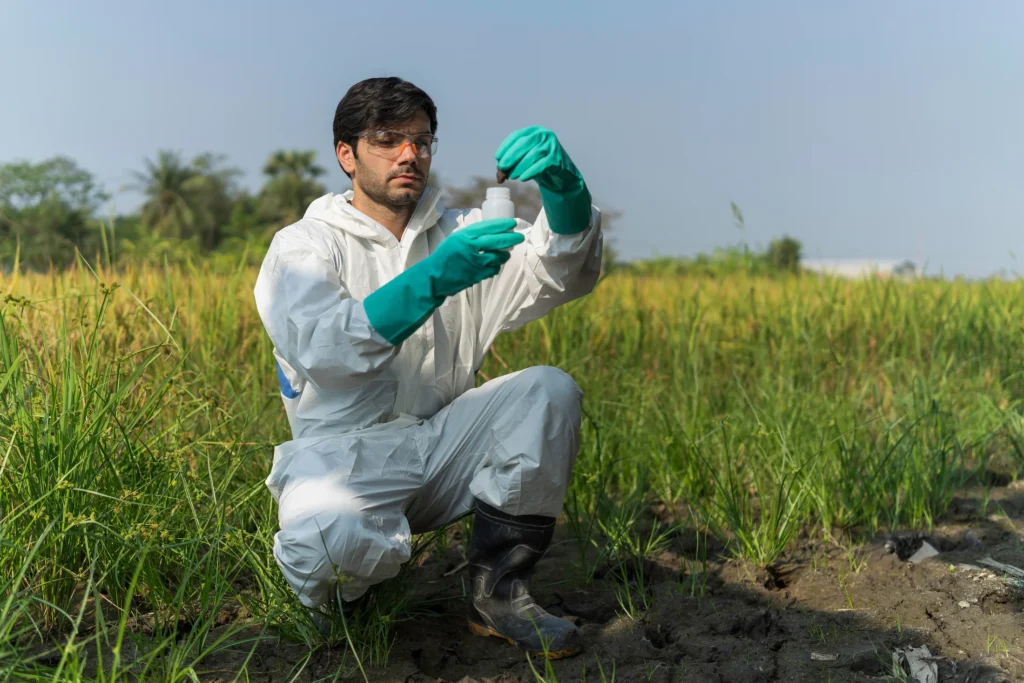
Source and exposure pathways
The assessment examines how contamination could reach people, water or other relevant parts of the environment.
Future use of the site
Housing, gardens and industrial operations can require different consideration of the same ground conditions.
Sources, pathways and receptors
A former tank, industrial process or area of made ground can indicate a possible source. The important question is whether a credible pathway connects that source to a receptor, such as direct contact with soil, vapour movement or leaching towards groundwater.
Historic information and a walkover usually establish the initial conceptual site model. Investigation is then directed at the uncertainties that could change the risk conclusion rather than collecting samples without a defined purpose.
Discuss contaminated land assessment
Complete the form and we will get back to you.
From assessment to investigation or remediation
Finding contamination does not automatically mean excavating and disposing of soil. The evidence may justify further investigation, a design change, treatment, containment or a conclusion that a particular linkage is not significant for the proposed use.
The report explains the evidence, assumptions and limits of the assessment. A conclusion prepared for commercial use may not remain suitable if the land later becomes housing, and classification of excavated waste is a separate decision.
How contaminant linkages are assessed
Laboratory results are interpreted against the site model and intended use rather than treated as a universal pass or fail. Where a linkage is considered absent, the evidence for that conclusion needs to be clear; where uncertainty remains, it is carried into the next decision.
Contaminated Land Assessment: common questions
Does finding contamination always mean removing the soil?
No. The risk assessment and remediation appraisal determine an appropriate response for the site and proposed use.
Is a land-risk assessment the same as waste classification?
No. Risk to the site’s users or environment and classification of excavated waste serve different purposes.
Can a report for one development be reused for another?
Only after its scope and assumptions are checked against the new proposal.
What does a conceptual site model show?
It links potential contamination sources with the pathways by which contaminants could travel and the people, water or other receptors that could be affected.
Can one soil concentration decide whether land is suitable for every use?
No. Results are interpreted against the conceptual site model, exposure pathways and intended use. The same concentration can have different significance in different settings.