Yes. A sustainable drainage system can provide enough storage to manage stormwater volumes and discharge rates while delivering inadequate pollutant treatment. Controlling how quickly water leaves an industrial development is not the same as controlling what that water contains. Both outcomes must be considered when selecting drainage features.
This distinction becomes particularly important where surface water drains from vehicle yards, service roads, parking areas or other operational hardstanding.
Storage capacity is not pollutant treatment
Runoff attenuation addresses the quantity and timing of surface water discharge. During heavy rainfall, storage features retain water temporarily and release it at a controlled rate, helping reduce peak flows into downstream drainage or receiving waters.
A detention basin, oversized pipe or storage tank might therefore perform effectively against a specified hydraulic design event. However, achieving the intended discharge rate does not demonstrate that pollutants have been sufficiently removed.
Stormwater can carry suspended sediment, hydrocarbons, metals and other substances accumulated on paved surfaces. Their movement depends on site activities, rainfall patterns and the physical or chemical characteristics of each pollutant.
Pollutant treatment has a different purpose. Depending on the contaminants present, suitable processes may include sediment settlement, filtration, interception by vegetation or other specifically selected treatment measures.
A storage feature might provide some incidental settlement, but this cannot be assumed to satisfy the required water-quality performance. Flow patterns, retention time, maintenance conditions and the characteristics of incoming runoff all influence treatment effectiveness.
Why catchment activities change treatment needs
Two industrial estates with similar roof areas and paved surfaces may require different approaches because their runoff is exposed to different activities.
A relatively clean warehouse roof generally presents a different pollutant profile from a busy vehicle manoeuvring yard. The yard may receive deposits from tyres, brakes, vehicle movement and minor operational residues. A loading or materials-handling area introduces further considerations depending on what is stored and how activities are controlled.
This means catchment boundaries should not be defined solely by the convenience of connecting several surfaces to one pipe. The development team needs to understand where runoff originates and what it could encounter before reaching a treatment feature.
Keeping cleaner roof runoff separate from more exposed industrial yard runoff can allow treatment to be matched to the differing risks. It may also prevent relatively clean rainfall from occupying treatment capacity intended for more affected flows.
The 2025 national SuDS standards for England address extreme rainfall management and water quality as distinct design objectives. They principally concern runoff that is essentially uncontaminated rainwater. Higher-risk land uses may require additional measures and separate regulatory consideration.
SuDS treatment for ordinary diffuse runoff should therefore not be treated as permission to discharge industrial process liquids or manage foreseeable significant chemical releases through conventional stormwater features.
Evaluate both objectives before selecting SuDS features
An effective design comparison needs two parallel sets of evidence rather than a single storage calculation.
- Hydraulic performance: Assess contributing areas, design rainfall, runoff volumes, discharge restrictions, available storage and safe exceedance routes.
- Pollution sources: Identify activities within each drainage catchment and the contaminants reasonably associated with those surfaces.
- Treatment performance: Establish how proposed features address the relevant pollutant types and whether treatment is required in combination.
- Operational conditions: Consider inspection access, sediment accumulation, maintenance responsibilities and the consequences of reduced treatment performance.
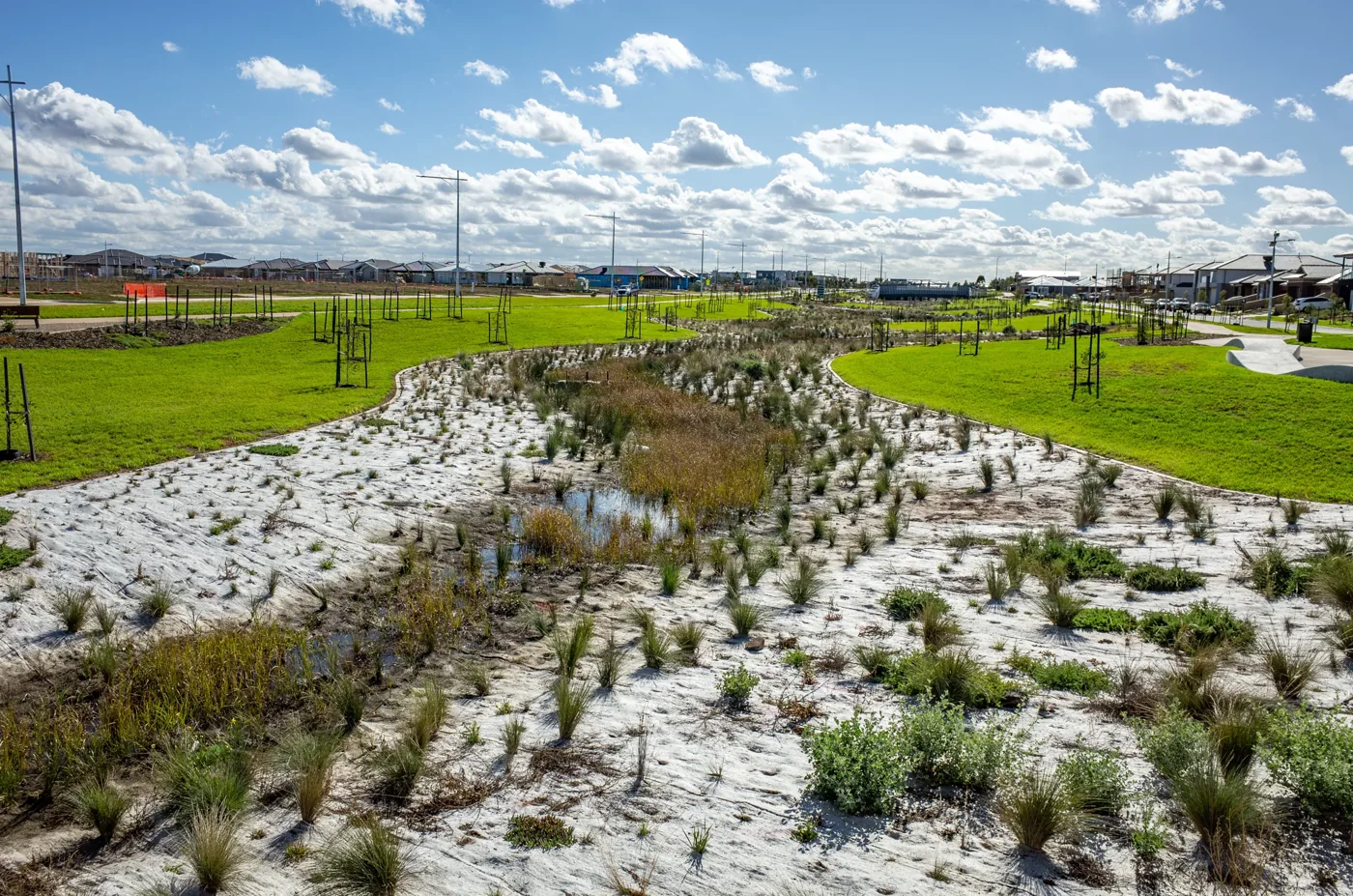
Several features operating in sequence may offer advantages. For example, runoff may pass through a suitable upstream treatment feature before entering a landscaped basin providing additional treatment and attenuation. The actual arrangement depends on ground conditions, pollutant risk, available space and the proposed discharge destination.
Where infiltration is proposed, the possible movement of pollutants towards groundwater requires particular consideration, especially on previously developed land.
A SuDS Design and Drainage Strategy should evaluate storage, treatment, discharge and long-term operation together. On sites with potentially contaminated ground, a Contaminated Land Assessment may also inform whether particular infiltration arrangements are appropriate.
The practical test is whether the drainage system manages both the quantity and the quality of runoff throughout its intended operating life, rather than simply meeting its calculated stormwater storage requirement.