UK environmental consultancy and site services

Industrial Site Decommissioning

Industrial site decommissioning involves more than clearing buildings and removing plant. Surveys, isolation, cleaning, waste removal and ground assessment need to be planned together, with records kept throughout the work. The condition of the site and any outstanding permit obligations must also be established before handover.

Industrial Site Decommissioning quote

What decommissioning a site involves

Industrial site decommissioning is the orderly shutdown of a working site: taking processes out of service, emptying and cleaning the plant that held materials, removing waste, dealing with hazardous materials in the fabric, settling the regulatory position and establishing the condition of the land underneath. Demolition, if it happens at all, is one activity within that, not the whole of it.

The order matters. Surveys should inform stripping work, services must be isolated before affected systems are opened, and waste needs to be classified before collection. Clearing a site before its history and remaining materials have been properly recorded can also make subsequent ground investigation more difficult.

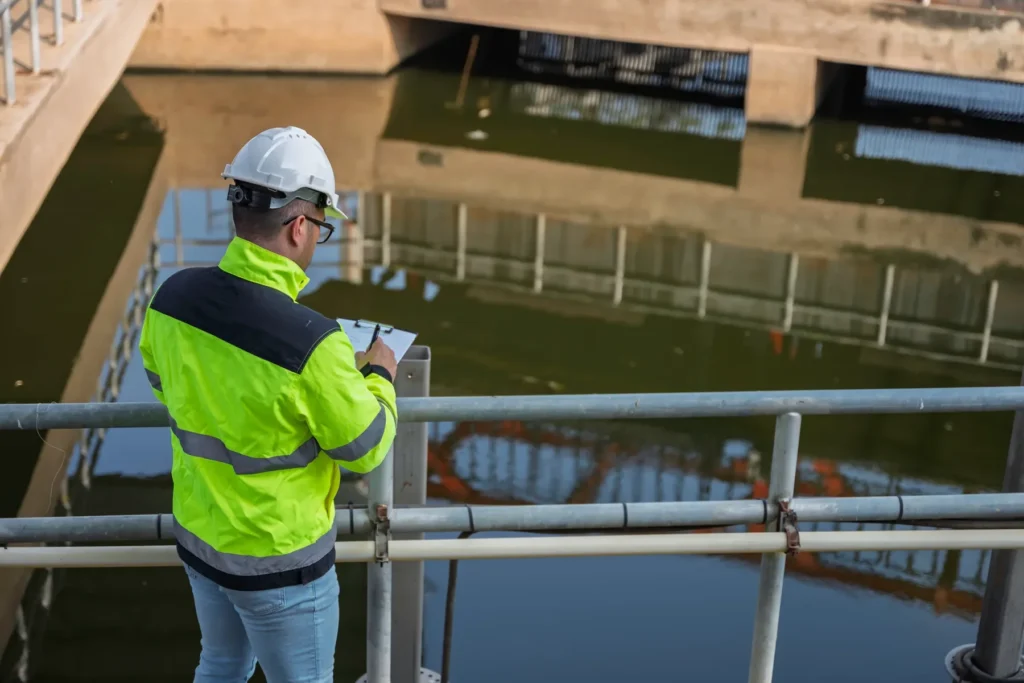
Person in a hard hat and high visibility jacket writing notes on a walkway above treatment tanks

Sequence before method

Survey the site, identify remaining materials, isolate affected systems and establish waste classifications before removal.

Permit position settled

Where a permit is held, establish whether surrender or partial surrender is required and what supporting evidence the regulator needs.

Evidence that outlasts the job

Cleaning records, waste documentation, investigation findings and as-left drawings provide a record of the site's condition at handover.

Surveys and inventory first

The starting point is a written record of what is on site and what has been on site. Drawings, process records, tank registers, permits, incident reports and aerial photography help establish the history, and a walkover tests it against what is actually standing. A Phase 1 desk study of the site history can provide the basis for identifying potential contamination and planning subsequent investigation.

The inventory should cover vessels, tanks and bunds with their last known contents, underground pipework and drainage runs, transformers and oil filled equipment, chemical stores, residues in pits and sumps, and any process that left a deposit on the structure itself. Unknown contents should be recorded as unknown until they can be identified. Sampling may be needed before decisions are made about cleaning, handling or disposal.

Survey findings also help establish which structures and systems can be removed, which require further investigation and which need to remain accessible during later work. Previous spills, changes in production and alterations to drainage can be particularly relevant when planning the shutdown.

Isolation and draining of systems

Services are isolated and the effectiveness of isolation confirmed before affected equipment is opened or worked on. This includes electrical supplies, steam, compressed air, gas, process lines and water systems. The arrangements depend on the equipment, remaining contents and work being undertaken.

Lines may need to be drained and flushed, with the resulting washings collected and managed appropriately rather than discharged into site drainage without establishing whether discharge is authorised. Drainage should also be traced and recorded where necessary. Interceptors, sumps, buried connections and old culverts may differ from the available drawings and can retain residues after production has stopped.

Where interconnected systems remain in use during a phased shutdown, the boundaries between operating and decommissioned plant need particular attention. Identifying those connections early helps determine which equipment can be taken out of service without affecting other parts of the site.

Tanks, vessels and pipework

Tank decommissioning generally involves identifying and removing remaining contents, dealing with sludges and residues, cleaning and establishing the condition of the vessel before further work. Depending on the tank, its contents and the proposed activity, gas freeing and atmosphere testing may also be required. Removal or retention in place is then considered against the condition of the tank and the intended future use of the site.

Product, washings, sludge and interceptor contents may require different waste classifications and disposal arrangements. Contaminated liquids can also require specialist collection and contaminated water disposal rather than being handled with solid waste or scrap materials.

Underground tanks need a recorded decision about whether they will be removed or retained after appropriate decommissioning. The surrounding ground should be considered as part of that decision. Where contamination is suspected, investigation or sampling during removal can provide useful evidence while the excavation is accessible.

Pipework, chambers and associated drainage should not be overlooked. Residual liquids and deposits can remain in low points, disconnected sections and buried systems after the main tanks have been emptied.

Asbestos and other hazardous materials

Asbestos in the building fabric needs to be identified through an appropriate survey before work that could disturb it. Most higher risk asbestos work must be undertaken by a licensed contractor. Licensable work must be notified to the appropriate enforcing authority using the ASB5 form at least 14 days before work starts. The HSE guidance on licensable asbestos work explains these requirements.

Other materials requiring assessment may include lead paint, refractory ceramic fibre, oil filled switchgear and transformers, refrigerant gases, lamps and batteries. Their removal and disposal arrangements depend on the material, its condition and the applicable waste classification.

Asbestos containing materials can also affect the classification of demolition waste and soil. Asbestos containing construction materials are classified as hazardous waste, and fragments mixed into soil can affect how that material must be classified and managed. Where asbestos is suspected in the ground, asbestos in soil testing can help establish its presence and inform subsequent decisions.

Blue asbestos fibres magnified under a microscope with a measurement scale overlaid

Discuss decommissioning an industrial site

Tell us about the site's former processes, remaining plant and any environmental permits. We can discuss the decommissioning requirements and the site information available.

Waste classification and the duty of care

Decommissioning can produce waste streams that were not routinely generated while the site was operating. These may include tank sludges, chemical residues, contaminated washings, insulation, demolition materials and contaminated soil. Each stream needs to be identified and classified according to its composition and the process or activity from which it arose.

Waste must be classified before it is collected, disposed of or recovered. Its description needs the appropriate waste code and hazardous status, with the relevant information recorded on the waste transfer or consignment documentation. Hazardous waste must not be mixed with non-hazardous waste or with other hazardous waste where prohibited. Separating materials at source also makes the subsequent classification and disposal arrangements easier to establish.

The waste producer or holder must make appropriate checks on the carrier and receiving facility and retain the required documentation. For hazardous waste in England, this includes the relevant consignment notes and consignee returns, with records retained for three years at the premises where the waste was produced or stored. The GOV.UK hazardous waste guidance sets out these responsibilities. Waste documentation and procedural requirements differ across the UK, so the rules of the relevant jurisdiction must be applied.

Waste records are also part of the site handover evidence. They help demonstrate which materials were removed, how they were classified and where they were taken. This is particularly useful when a former industrial site is being investigated for redevelopment or when the environmental permit position is being reviewed.

Surrendering an environmental permit

Where a site holds an environmental permit, the permit position needs to be addressed as part of closure. Cancelling all or part of a permit is known as surrender or partial surrender. Permit charges can continue until surrender has been completed.

In England, installations, intensive farming, waste and mining waste permits are surrendered through an application process that includes the surrender section of the site condition report. Standalone water discharge, groundwater and flood risk activity permits can be surrendered by notification. The Environment Agency guidance on changing, transferring or cancelling an environmental permit explains the applicable procedures. Scotland, Wales and Northern Ireland have their own regulators and permitting arrangements.

For an installation permit, the site condition report provides a record of relevant land and groundwater conditions and supports the assessment of the site’s condition at surrender. Information gathered during decommissioning, including records of releases, waste removal, investigations and any remedial work, may be needed to support the submission.

The permit review should therefore take place alongside the physical shutdown rather than being left until the site has been cleared. The related environmental permit applications service page covers the wider permitting process.

Land quality and verification

Once access is available, the ground can be assessed against the site history and the proposed future use. Land contamination risk management follows three stages: risk assessment, options appraisal, then remediation and verification. The Environment Agency, Northern Ireland Environment Agency, Scottish Environment Protection Agency and Natural Resources Wales expect this approach to be followed when managing risks from historic land contamination, alongside relevant national guidance.

The GOV.UK land contamination risk management guidance explains these stages. In practice, the conceptual site model developed from the site history and preliminary assessment can be tested through intrusive investigation where appropriate. Findings are assessed to determine whether unacceptable risks exist and whether further action is necessary.

Areas around former tanks, loading bays, chemical stores, drains, interceptors and historic spill locations may need particular attention. Removing plant or opening up hardstanding can reveal conditions that were previously concealed, although investigation may also be required before demolition or excavation begins.

Where work is needed, the objectives should be established before remediation starts. The evidence required for permit surrender, planning or a property transaction can differ, so the intended purpose of the assessment needs to be clear. Land remediation services address the treatment or management of identified contamination, with verification against the agreed objectives. A contaminated land assessment examines sources, pathways and receptors to establish whether contamination presents an unacceptable risk.

What the owner holds at handover

The end point of a decommissioning project should be a clear record of the condition of the site and the work carried out. That information may be needed for a sale, redevelopment, permit surrender or future investigation. It also identifies any structures, buried services or materials that remain in place.

The handover information will depend on the scope of the work, but commonly includes:

  • Pre-works surveys, including asbestos information and the site history
  • Tank and vessel cleaning records and atmosphere test results where applicable
  • Waste consignment and transfer notes, together with relevant consignee returns
  • Permit surrender documentation and the regulator’s decision where applicable
  • Ground investigation findings and verification reports for any remediation undertaken
  • As-left drawings of services, drainage, removed equipment and anything retained in place

The records should make it possible to distinguish between work that has been completed, areas that have been investigated and any outstanding matters. For a site being transferred to another owner, that distinction is important when assessing its condition and planning future use.

Industrial Site Decommissioning: common questions

What does decommissioning an industrial site involve?

Surveying and recording what is present, isolating and draining services, emptying and cleaning tanks and vessels, identifying asbestos and other hazardous materials, classifying and removing waste, dealing with any environmental permits and assessing the ground. Remediation may be needed where unacceptable contamination risks are identified. Demolition may form part of the project but is not the whole process.

When does a permit have to be surrendered?

Surrender or partial surrender is considered when a permitted activity ceases or the operator wants to give up all or part of the permit. In England, the procedure depends on the permit type. Installation and waste permits generally require an application, while certain standalone water discharge, groundwater and flood risk activity permits can be surrendered by notification. Charges can continue until surrender is completed. Different arrangements apply in Scotland, Wales and Northern Ireland.

What happens to the tanks?

Remaining contents and residues are identified and removed, followed by cleaning and any necessary gas freeing or atmosphere testing. The tank may then be removed or retained following appropriate decommissioning. Product, washings and sludge need to be assessed for waste classification. For underground tanks, the surrounding ground may also need investigation or sampling, particularly where leaks or historic spills are suspected.

Who is responsible for the waste produced?

The waste producer or holder has duty of care responsibilities, including correct classification, suitable documentation and checks on the carrier and receiving facility. In England, hazardous waste consignment records and consignee returns must be retained for three years at the premises where the waste was produced or stored. Specific procedures vary between UK jurisdictions.

Should site investigation happen before or after demolition?

Investigation can take place at both stages. A desk study and preliminary assessment before demolition help identify potential contamination and preserve relevant site information. Further investigation may be undertaken when structures, tanks or hardstanding have been removed and previously inaccessible areas can be examined. The sequence depends on the site history, known risks and planned works.

What does the owner hold at the end?

The handover record should reflect the work undertaken. It may contain pre-works surveys, tank cleaning and atmosphere testing records, waste transfer and consignment documentation, permit surrender decisions, investigation results, remediation verification reports and as-left drawings. It should also identify any retained structures, buried services or outstanding environmental matters.

Environmental Services

Services

Request a quote

Menu

Get a quote