A clean-looking industrial site can still contain contaminated soil, groundwater or buried materials. Fresh surfacing, maintained buildings and the absence of staining provide information about current visible conditions, but cannot establish what lies beneath the ground.
For an industrial property buyer, the concern is whether previous activities have left contamination that could affect the intended use, future works or surrounding environment. A site may look entirely ordinary while historical tanks, drains, fill deposits or chemical handling areas remain concealed.
Why visual condition is not subsurface evidence
Surface condition reflects what can be observed at the time of inspection. It does not necessarily reveal how the site was used decades earlier or whether contaminated materials were subsequently covered.
A former engineering works, for example, might now have a newly resurfaced yard. Beneath it could be made ground containing industrial residues, an abandoned service trench or soil affected by an earlier loss of oil.
Equally, an industrial history does not establish that unacceptable contamination is present. The question is whether credible sources exist and whether they could affect something relevant to the property’s present or proposed use.
The buyer should distinguish three separate observations:
- Appearance: Whether there is visible staining, damaged surfacing, disturbed ground or evidence of poor storage.
- History: What operations occurred, where potentially contaminating activities took place and whether the site layout has changed.
- Subsurface evidence: What investigation results establish about soil, groundwater and other relevant ground conditions.
Only the third provides direct evidence about the investigated ground. Even then, findings depend on where samples were collected and what was analysed.
How historical processes create hidden pathways
Contamination does not always remain where a substance originally entered the ground. Its movement depends on the material, ground conditions and possible pathways.
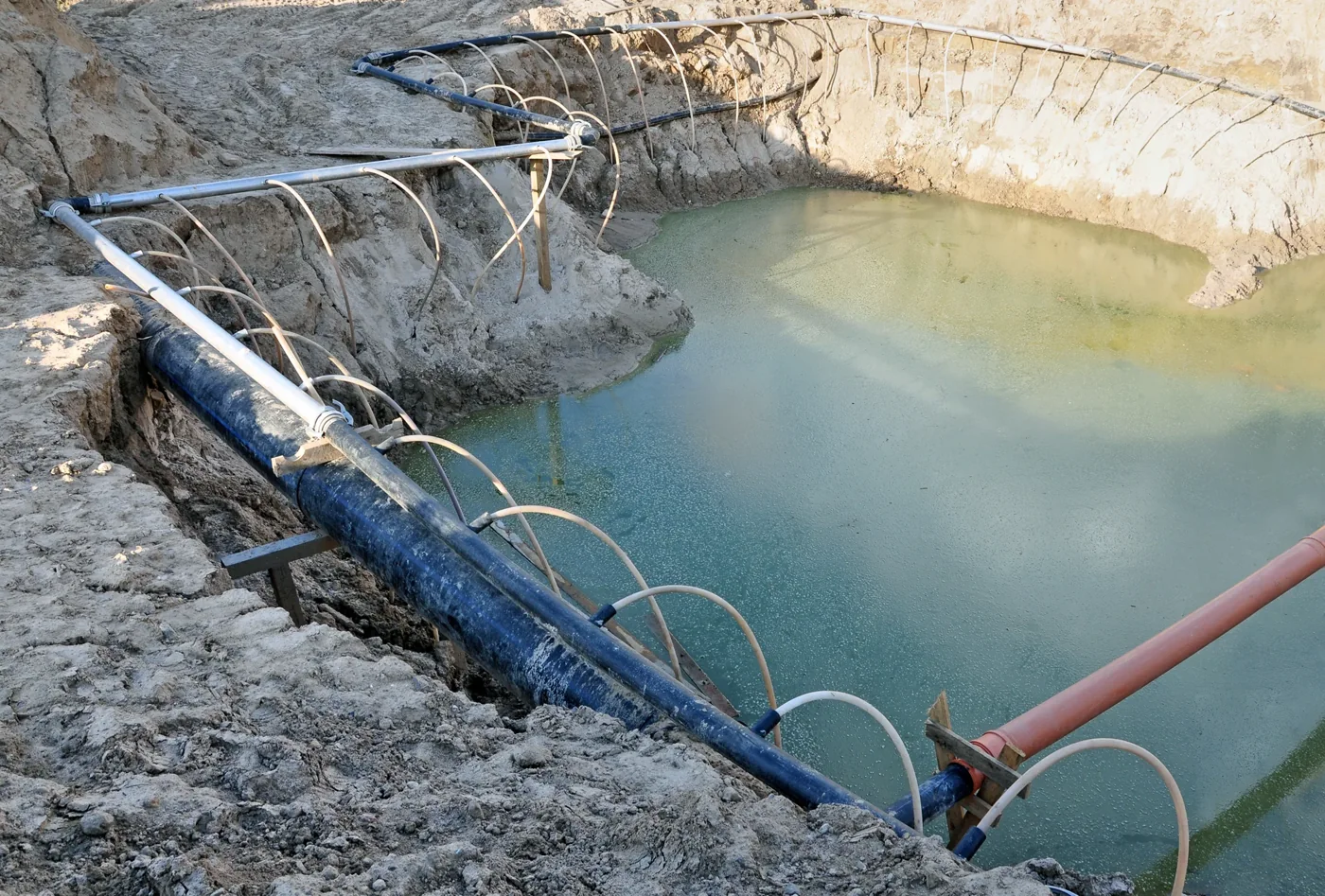
Petroleum hydrocarbons released around a former storage area might affect nearby soil and, under suitable conditions, migrate through permeable layers. A groundwater pathway could connect the original source with another part of the site or an off-site receptor.
Old drainage routes, service corridors and areas of disturbed ground may also influence contaminant movement. These features are important because current site boundaries do not necessarily correspond with the extent of historical environmental effects.
The Environment Agency’s land contamination risk management guidance uses relationships between sources, pathways and receptors to assess potential contamination risks in England.
Possible receptors include people using the property, groundwater, nearby surface waters and other environmental features. A contaminant’s presence alone does not establish an unacceptable risk. Its concentration, behaviour and potential for exposure also matter.
Select investigation targets from a conceptual model
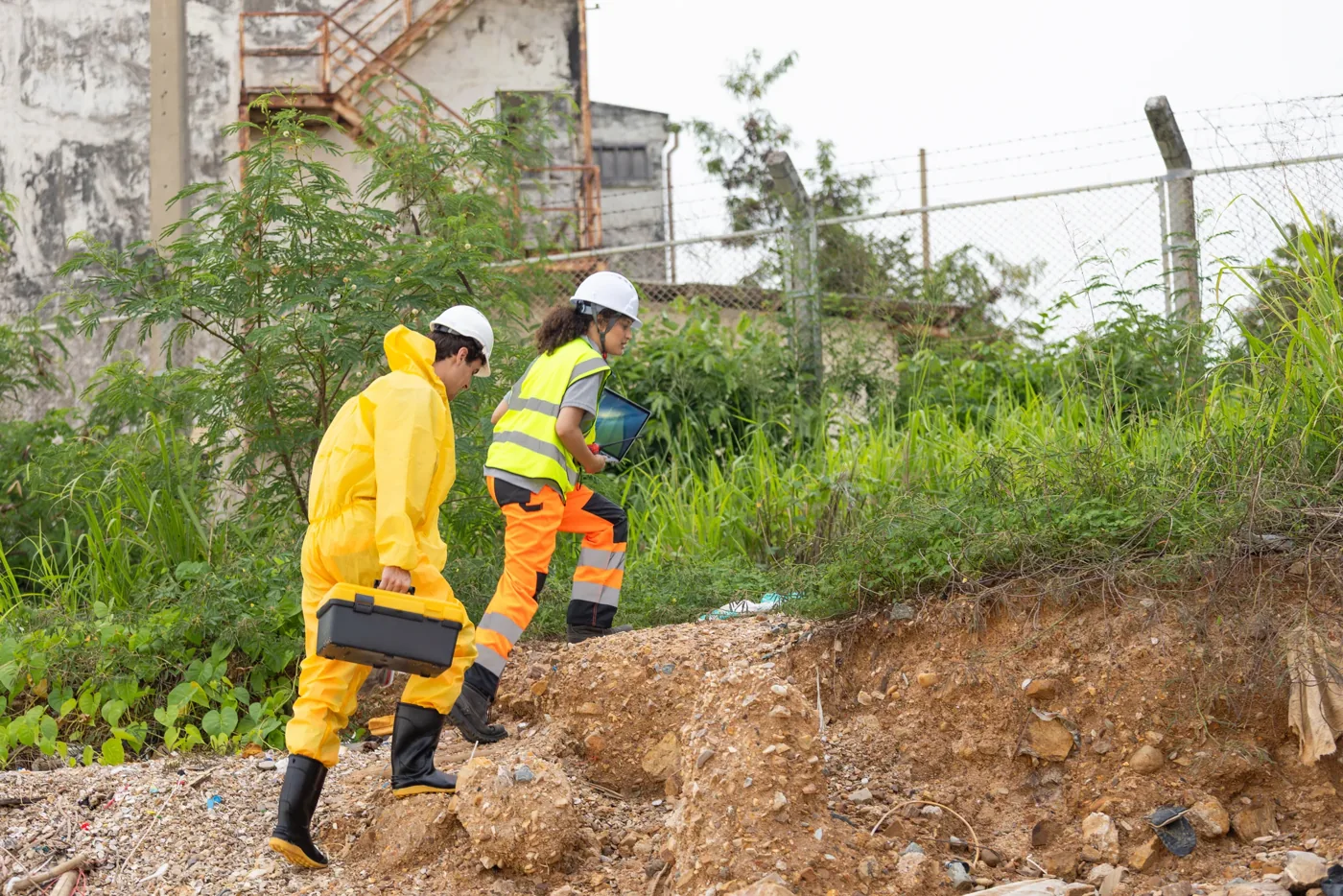
The starting point is normally a preliminary contamination risk assessment using historical records, site observations and environmental information. This can identify whether further investigation is justified and which uncertainties need testing. Any intrusive investigation should then follow the questions raised by the property’s history and environmental setting, rather than treating every part of the plot as equally likely to be affected.
A conceptual site model brings together potential contamination sources, the routes by which substances could move and the receptors that might be affected.
For a former manufacturing property, the model might identify former chemical stores, vehicle maintenance areas, waste handling locations or redundant underground infrastructure as potential investigation targets.
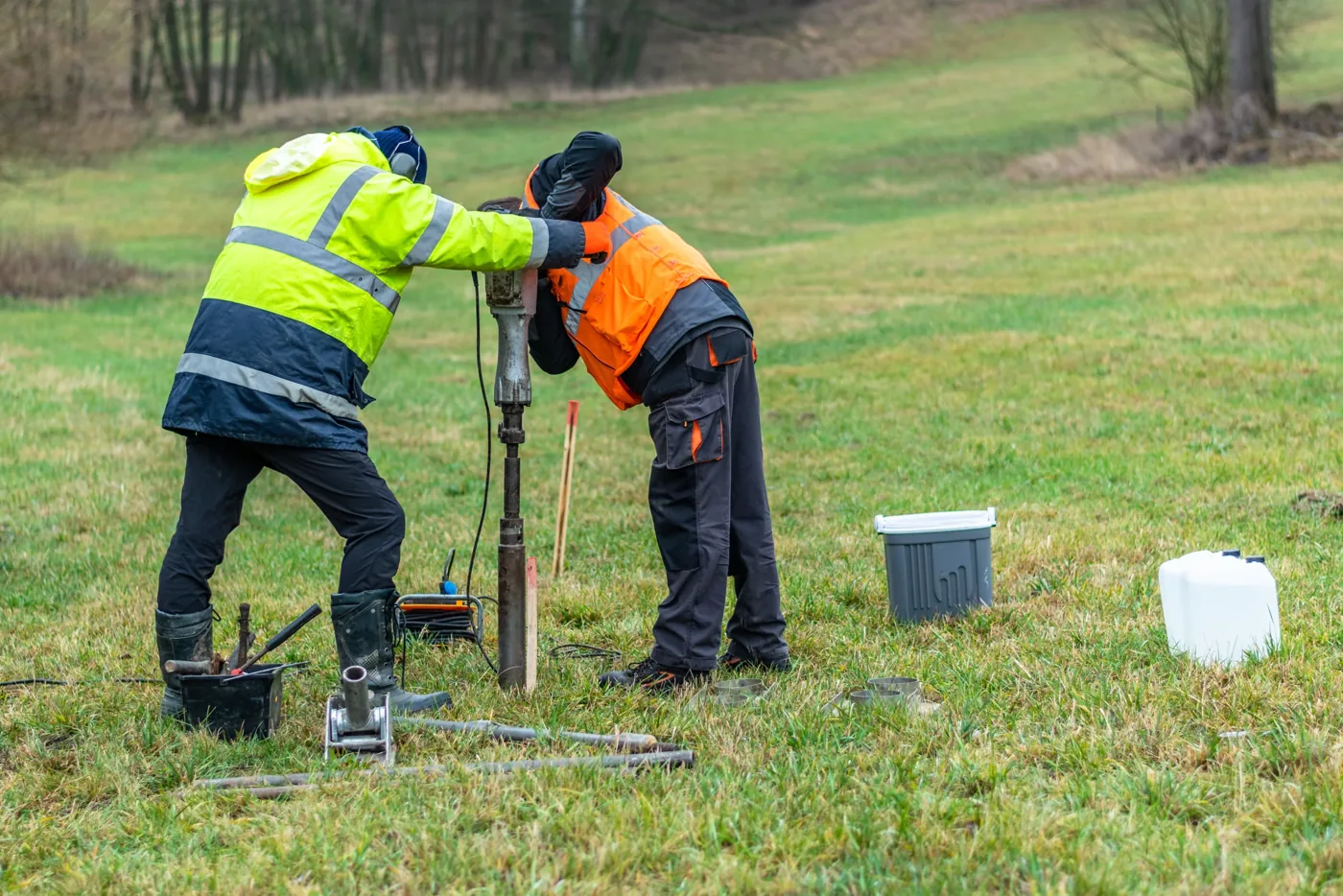
Targeted boreholes, trial pits and appropriate sampling can then test specific assumptions. Groundwater monitoring may be relevant where the model identifies a plausible groundwater pathway. Analytical testing should reflect the contaminants reasonably associated with the historical activities.
The Phase 2 Site Investigation service addresses the targeted intrusive investigation of identified uncertainties, while Ground Investigation covers investigation and testing selected for the questions the site presents.
For a buyer, a useful investigation does more than produce laboratory results. It explains what was examined, what the findings mean for the proposed use and which uncertainties remain.
A well-maintained surface is reassuring as an observation of current management. It is not a substitute for evidence about historical contamination beneath that surface.