For a development that may require an Environmental Impact Assessment (EIA), screening usually comes before scoping. Screening establishes whether the proposal requires EIA under the applicable regulations. Scoping establishes what an Environmental Statement should examine once EIA is required or the developer has decided to undertake it.
These are different decisions. Commissioning detailed environmental studies before resolving whether EIA is required can create unnecessary work. Equally, assuming a project falls outside EIA simply because its building footprint is modest can leave significant environmental effects unidentified.
First establish whether the project falls within the EIA regulations
For ordinary town and country planning applications in England, the starting point is the Town and Country Planning (Environmental Impact Assessment) Regulations 2017. Other consenting regimes, including those applying to nationally significant infrastructure projects, have their own EIA procedures.
Under the English town and country planning regime, the principal distinction is between Schedule 1 and Schedule 2 development.
- Schedule 1: Projects within the prescribed categories require EIA.
- Schedule 2: Projects meeting the relevant description and thresholds or criteria, or located partly or wholly in a designated sensitive area, require consideration of whether significant environmental effects are likely.
- Other development: Proposals outside the relevant EIA categories are not automatically subject to this particular EIA regime, although other planning assessments may still be necessary.
The government’s Environmental Impact Assessment planning guidance explains these distinctions and the screening procedure.
A developer should therefore examine the precise activity, project boundaries, scale and location, rather than using a broad label such as industrial development or warehouse extension to determine EIA status.
What does an EIA screening request need to establish?
Screening asks whether the development is likely to have significant environmental effects. The answer depends on the characteristics and location of the proposal and the nature of its potential effects.
For example, two developments with similar floor areas might present very different environmental questions. One could occupy previously developed land with limited changes to traffic and emissions. Another could introduce intensive operations near sensitive habitats, residential properties or water resources.
A useful screening submission needs a sufficiently defined proposal. Relevant information can include:
- The proposed use, development area and principal physical works.
- Expected operational activity, including material handling, production and vehicle movements.
- Relevant nearby environmental receptors and designated sites.
- Potential emissions, water effects, land disturbance and other environmental changes.
- Features of the proposal and measures intended to avoid or prevent significant adverse effects.
- Other existing or approved developments that could contribute to cumulative effects.
The local planning authority normally provides a screening opinion in response to an appropriate request. A negative opinion means EIA is not required for the proposal considered. A positive opinion means EIA is required.
Neither outcome replaces other technical reports needed for an acceptable planning application.
When does EIA scoping become useful?
Where EIA is required, scoping identifies the environmental matters that need detailed assessment and the information the Environmental Statement should contain.
Scoping is particularly valuable where numerous potential topics have been identified but the likely significant effects are concentrated in a smaller number of areas.
A project involving new industrial buildings, access roads and changes to operational activity might raise questions about noise, air quality, traffic, ecology, drainage and ground conditions. Each question does not automatically require equally extensive investigation.
The scoping exercise should distinguish matters requiring detailed assessment from those for which existing information supports a proportionate explanation.
Under the English town and country planning EIA regime, a developer can request a formal scoping opinion before submitting the planning application. The authority consults the relevant consultation bodies before issuing its opinion. A formal scoping opinion is not mandatory in every EIA case.
The government’s EIA guidance on scoping opinions explains that a subsequent Environmental Statement must be based on the most recent applicable scoping opinion or direction, while also meeting the information requirements of the regulations.
Can technical surveys begin before the screening decision?
Yes. Screening does not have to prevent early evidence gathering, particularly where information is needed to define the development or assess time-sensitive constraints.
The important distinction is between investigations that improve a genuine project decision and a full programme of EIA reporting commissioned without an established scope.
For example, an early Preliminary Ecological Appraisal may identify habitat constraints and the potential need for seasonal surveys. Those findings can influence both the design and subsequent screening or scoping information.
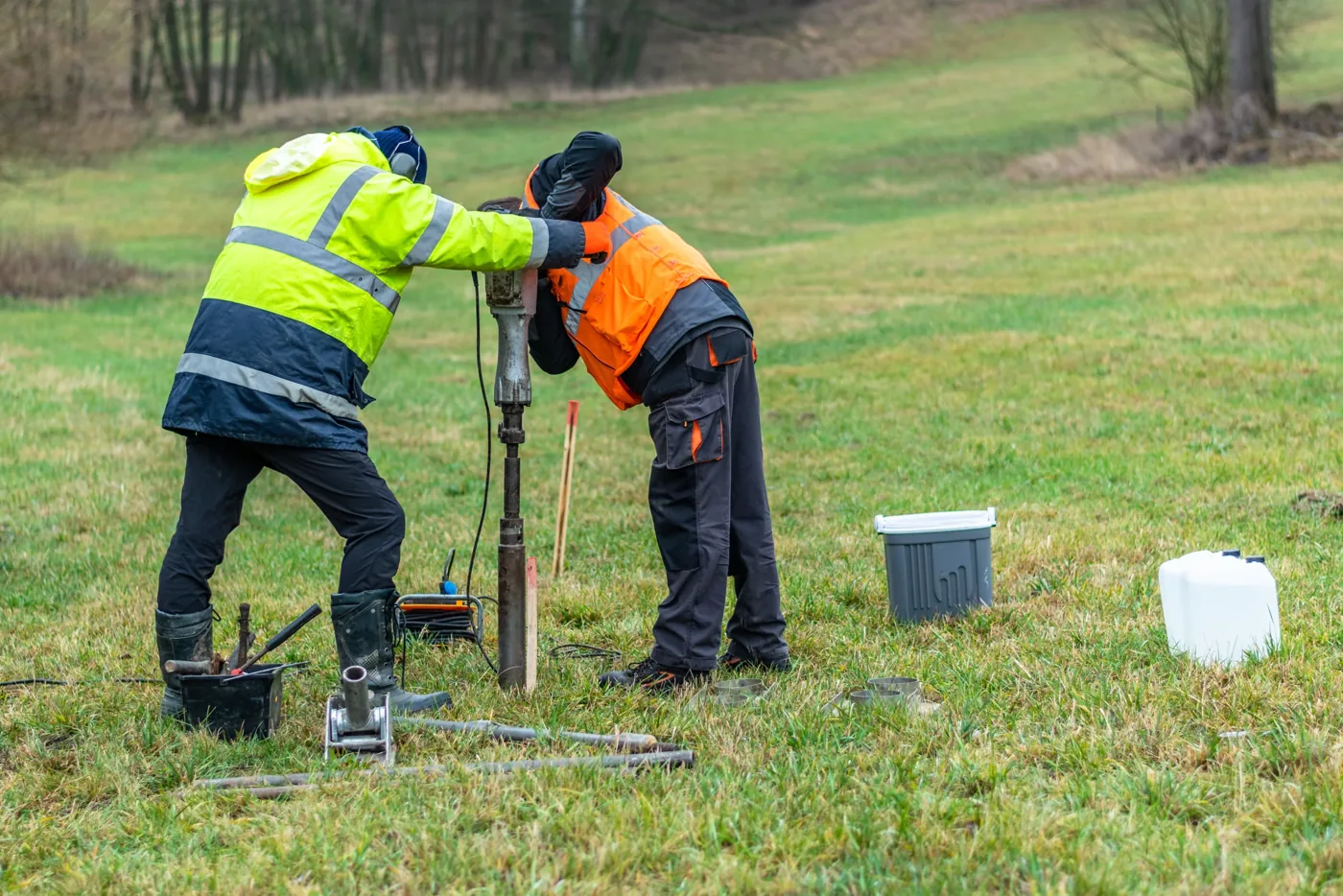
Likewise, an existing site investigation might already provide reliable ground-condition information. It should not automatically be repeated merely because EIA becomes necessary.
Early investigations are most useful when their objectives, methodology and reporting can serve the eventual planning evidence. A specialist assessment completed for a different development layout may need reviewing if the project changes materially.
Why must the Environmental Statement use one consistent development description?
Once EIA is required, the Environmental Statement brings together the assessment of likely significant effects and relevant mitigation. The underlying technical chapters must describe the same proposed development.
Inconsistencies can cause practical problems. A noise study based on daytime operation alone might not align with a proposal permitting evening production. An air-quality study based on one vehicle forecast might conflict with a transport assessment using another.
Changes to building positions, access arrangements, operating capacity or construction methods may alter more than one environmental assessment.
A coordinated Environmental Impact Assessment therefore needs a controlled description of the project, agreed assumptions and a mechanism for reviewing relevant changes.
The Environmental Statement must also distinguish predicted effects from proposed mitigation and any remaining significant effects. Presenting a possible design measure as though it were already an established project commitment can obscure what is actually being assessed.
How should a developer choose the next step?
Start by confirming the consenting route and whether the development falls within the applicable EIA categories. Then establish whether the project description and available environmental information are sufficient for screening.
If EIA is required, define the scope of specialist assessments early enough to influence design. For complex proposals, a formal scoping opinion can help clarify the planning authority’s expectations before substantial technical reporting is completed.
If EIA is not required, the project may still need individual planning reports addressing particular environmental risks. The screening outcome should guide the process, not be mistaken for a general finding that the development has no environmental effects.
The most useful early decision is whether the next expenditure should establish EIA status, resolve a specific environmental uncertainty or develop the evidence for an already confirmed Environmental Statement.
For proposals requiring coordinated EIA evidence, request a quote for Environmental Impact Assessment support.